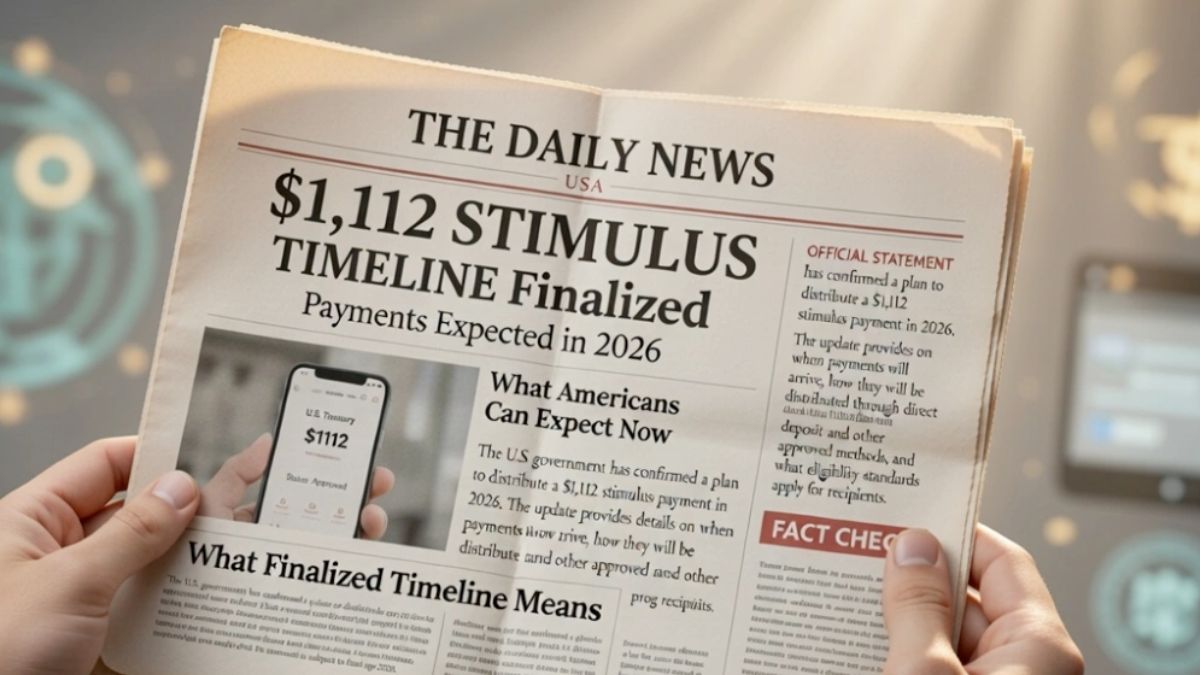
The federal government has confirmed the timeline for a $1,112 stimulus payment in 2026. This one-time payment is designed to provide short-term financial relief to eligible individuals and households. With prices for food, rent, fuel, and healthcare still putting pressure on family budgets, many people are looking closely at when this payment will arrive and whether they qualify.
The payment will be issued mainly through direct deposit for those who already have bank information on file with the Internal Revenue Service. Others will receive their money through paper checks or prepaid debit cards. The confirmed schedule is meant to ensure that funds are delivered in an organized and secure way.
When the Payments Will Begin
According to the announced schedule, distribution of the $1,112 stimulus payment will begin on February 15, 2026. Direct deposits will be processed first, as this method allows funds to reach recipients faster. Individuals with correct and updated banking details on their most recent tax return are likely to see the deposit soon after processing begins.

For those without bank details on file, paper checks or prepaid cards will be mailed. Mailed payments usually take longer because they must go through printing, mailing, and delivery. The phased approach helps reduce system overload and allows verification checks to be completed properly.
The IRS will provide online tools so recipients can track their payment status. This allows individuals to see whether their payment has been approved, processed, or sent.
Who Qualifies for the $1,112 Payment
Eligibility for the stimulus payment depends mainly on income level, tax filing status, and residency requirements. Individuals and households that meet federal income limits and have filed recent tax returns will generally qualify automatically.

People whose income exceeds the federal threshold will not be eligible for the payment. In addition, individuals who are listed as dependents on another person’s tax return are usually excluded. These rules are intended to ensure that the financial support reaches households that need it most.
If someone has not filed taxes recently but meets income and residency requirements, they may still be eligible. However, they may need to submit their personal information through official IRS channels to claim the payment.
Verification and Security Process
Before any payment is issued, the IRS uses secure systems to verify identity and eligibility. This process checks income records, tax filing history, and banking information. If the information matches IRS records, the payment is approved for release.

Individuals who have filed recent returns and provided accurate bank details will likely move through verification smoothly. Non-filers or those with outdated information may need to complete additional identity confirmation steps.
These verification measures are important because they reduce fraud and ensure that funds are sent to the correct recipients.
How Non-Filers Can Claim the Payment
People who qualify but have not filed a recent tax return should visit the official IRS website to see if they need to submit information. The process typically requires personal details, proof of identity, and banking information for direct deposit.

Submitting accurate and complete information is essential. Any errors in Social Security numbers, addresses, or bank details can delay payment processing. Once verification is complete, eligible individuals will receive the payment according to the official timeline.
Steps to Avoid Delays
To receive the $1,112 payment on time, individuals should review their most recent tax filing. Confirm that direct deposit details are correct and that mailing addresses are updated if necessary. Monitoring official IRS announcements will also help prevent confusion.
Avoid sharing personal or financial information on unofficial websites or social media links. All updates and payment tracking tools should be accessed only through verified government portals.

Final Thoughts
The confirmed $1,112 stimulus payment for 2026 offers temporary financial support to eligible households. With payments beginning February 15, 2026, understanding eligibility rules and verification procedures is essential. Filing accurate tax information and keeping records updated will help ensure smooth and timely receipt of funds.
Disclaimer: This article is for informational purposes only and does not provide legal, tax, or financial advice. Payment amounts, eligibility requirements, and distribution timelines are determined by federal authorities and may change. Individuals should consult official IRS communications or qualified tax professionals for guidance specific to their situation.