
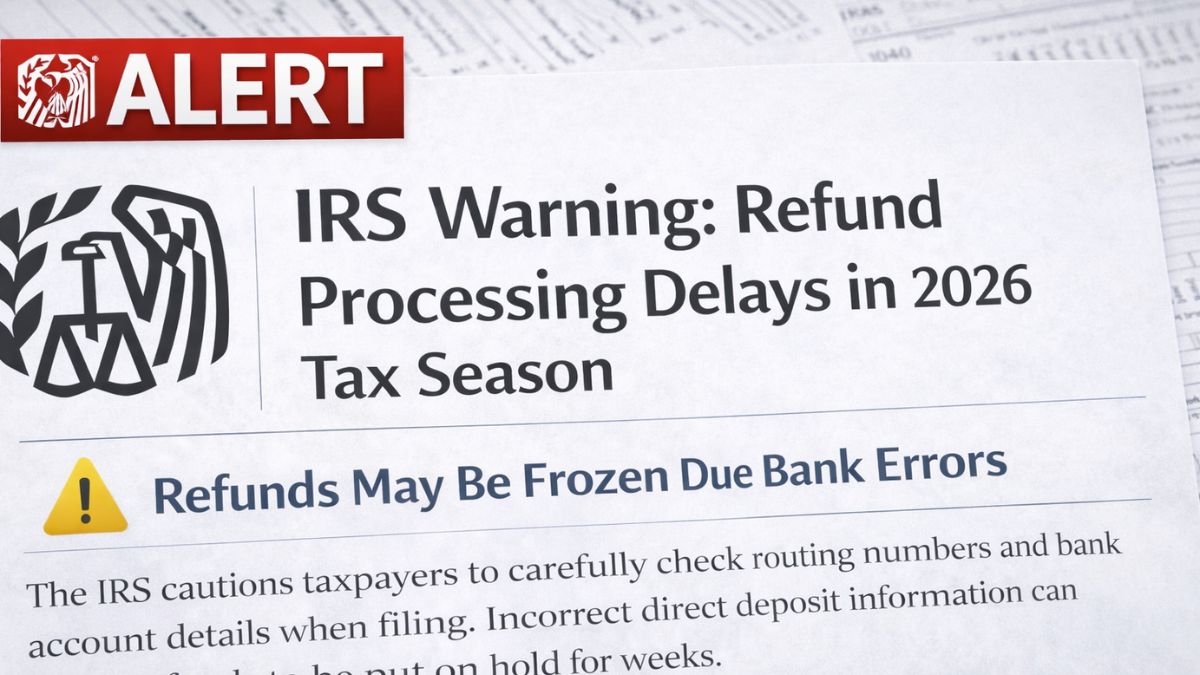
As the 2026 tax filing season begins, the Internal Revenue Service has issued an important warning to taxpayers. Even small mistakes on a tax return can lead to serious delays in receiving a refund. One of the most common problems involves incorrect direct deposit information. Because millions of Americans depend on their refunds to manage bills and expenses, understanding these risks can help prevent weeks of waiting.
Why Banking Errors Create Major Problems
The IRS has continued to move toward electronic payments and reduce the use of paper checks. Most taxpayers who file electronically and provide correct bank details receive their refunds within about 21 days after their return is accepted. Electronic filing allows returns to move quickly through automated systems, and direct deposit avoids postal delays.
However, problems arise when taxpayers enter the wrong routing number or bank account number. If the bank rejects the payment due to incorrect details, the refund does not automatically return to the taxpayer’s account right away. Instead, it is placed on hold inside the IRS system. Because the IRS now relies heavily on automated processing, the system cannot simply correct the error without action from the taxpayer.

What Happens When a Refund Is Frozen
If a refund cannot be delivered due to incorrect banking information, the IRS typically sends a formal notice explaining the issue. Taxpayers are usually given a limited period, often around 30 days, to correct the mistake through their secure IRS online account.
If the correction is made within that time, the refund can be reissued electronically. However, if the taxpayer does not respond promptly, the situation becomes more complicated. The IRS may eventually issue a paper check instead of direct deposit. This change adds significant processing time, and the overall delay can stretch several weeks beyond the normal 21-day window.
In some cases, the waiting period can extend even longer, especially if additional identity verification steps are required. That is why reviewing all details carefully before filing is so important.

Added Pressure During the 2026 Tax Season
The 2026 tax season is facing additional challenges. Staffing reductions within the IRS and updated tax regulations have increased the complexity of return processing. With fewer employees handling returns and more rules to apply, even minor errors may take longer to resolve.
This environment makes accuracy more critical than ever. Small mistakes that might have been corrected quickly in the past can now lead to extended processing delays.
How to Avoid Refund Delays
The best way to prevent refund problems is to double check all personal and banking information before submitting a return. Taxpayers should verify routing and account numbers directly from official bank statements. Guessing numbers or copying outdated information increases the risk of rejection.

Creating or logging into an IRS online account can also help. These accounts allow taxpayers to monitor refund status, receive notices, and respond quickly if a problem occurs. Filing electronically and choosing direct deposit with verified banking details remains the fastest and most reliable method.
Taking a few extra minutes to review every section of the return can prevent weeks of waiting later. Careful preparation is one of the simplest ways to protect your refund during the 2026 tax season.
Final Thoughts
Tax refunds are an important financial resource for many households. While electronic filing and direct deposit generally speed up the process, small errors in bank information can freeze a refund and cause significant delays. By reviewing details carefully and responding quickly to any IRS notice, taxpayers can reduce the risk of disruption and receive their money sooner.

Disclaimer: This article is for informational purposes only and does not provide legal, financial, or tax advice. IRS policies, procedures, and refund timelines may change. Taxpayers should rely on official IRS communications or consult a qualified tax professional for guidance specific to their individual situation.

